→ heute
Serenissima
Beschreibung
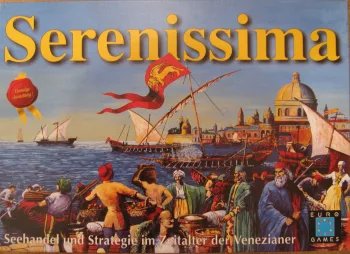
Das Thema
Im vierzehnten Jahrhundert war der Atlantik ein Ozean ohne Ende, und Amerika war noch unentdeckt. Das Mittelmeer war ein Meer des großen Wohlstands – die einzige Verbindung zwischen Ost und West. Die größten Flotten jener Zeit kämpften um die lukrativsten Handelsrouten.
Handelsstädte wie Venedig, Genua, Barcelona oder Istanbul wurden so mächtig wie ganze Nationen, etablierten Handelsrouten bis nach Nordafrika oder in den Nahen Osten und brachten Gewürze, Edelsteine oder Gold ins westliche Mittelmeer zurück. SERENISSIMA lässt diese Ära wiederaufleben, als das Mittelmeer das Zentrum des Welthandels war.
Das Spiel
Jeder Spieler schlüpft in die Rolle eines dieser vier Stadtstaaten. Ihr Ziel ist es, ihren Einflussbereich im Mittelmeer zu etablieren und mit allerlei Handelsgütern zu handeln, um ihr Handelsimperium zum wohlhabendsten zu machen. Im Laufe des Spiels müssen die Spieler Galeeren bauen, Besatzung anheuern und Handelsgüter kaufen bzw. verkaufen. Der Wert der Waren kann durch Spieler beeinflusst werden, die Monopole auf bestimmte Handelsgüter besitzen. Die Spieler können auch die Kontrolle über Häfen übernehmen und so zusätzliche Einnahmen von den Spielern erzielen, die den Hafen nutzen, sowie die spezifische Ware dieses Hafens erhalten.
Am Ende basiert die Wertung auf der Anzahl der Häfen, die jeder Spieler kontrolliert, aber auch darauf, dass diese Häfen verschiedene Arten von Waren vorrätig haben. Es gibt drei Arten von Häfen: kleine, mittlere und Stadtstaaten. Während kleine Häfen recht einfach zu befriedigen sind (sie benötigen nur zwei Waren, um als „voll“ zu gelten), sind die vier Start-Stadtstaaten weitaus schwieriger zufrieden zu stellen, da sie alle verfügbaren Waren benötigen (6 zusätzliche Waren plus diejenige, die sie selbst produzieren).
Im Laufe des Spiels bestimmen die Anzahl und Art der in den Häfen verfügbaren Güter auch die Anzahl der Besatzungsmitglieder, die man anheuern kann, ob man Galeeren oder Festungen bauen kann und den Preis der Güter beim Verkauf. Beispielsweise kann ein Spieler keine neuen Galeeren bauen, solange er in keinem der von ihm kontrollierten Häfen über Holz und Eisen verfügt. Sobald eine Galeere gebaut wurde, stehen 5 Plätze zur Verfügung, die mit Besatzung oder Waren besetzt werden können. Jedes Besatzungsmitglied ermöglicht die Bewegung um ein Feld und macht die Galeere leistungsfähiger. Diese Plätze werden jedoch auch benötigt, um die Waren zu transportieren, die Geld einbringen. Geld, das verwendet werden kann, um neue Besatzungen anzuheuern, neue Galeeren zu bauen oder Rohstoffe zu erwerben. Es muss also ein Gleichgewicht gefunden werden zwischen dem Handel mit Rohstoffen und der Eroberung von Häfen – zwischen einer Flotte von Handelsgaleeren und einer Flotte von Kriegsschiffen.
Das Spiel dauert je nach Anzahl der aktiven Spieler zwischen 5 und 8 Runden. Die Spielreihenfolge wird durch eine Auktion festgelegt. Der Gewinner der Auktion entscheidet, ob er als Erster, Zweiter, Dritter oder Letzter spielt. Je nach Situation und den Absichten des Spielers kann es gleichermaßen interessant sein, als Erster oder als Letzter zu spielen. Wenn ein Spieler beispielsweise als Erster spielt, kann er zwar nicht auf die Züge der anderen Spieler reagieren, aber er kann vermeiden, dass seine Galeeren blockiert werden.
 Amazon.de